A three-day trip to Goa is a different proposition from a week. You have roughly sixty usable hours, two of which you will lose at each end to airports, and the margin for a bad decision is thin.
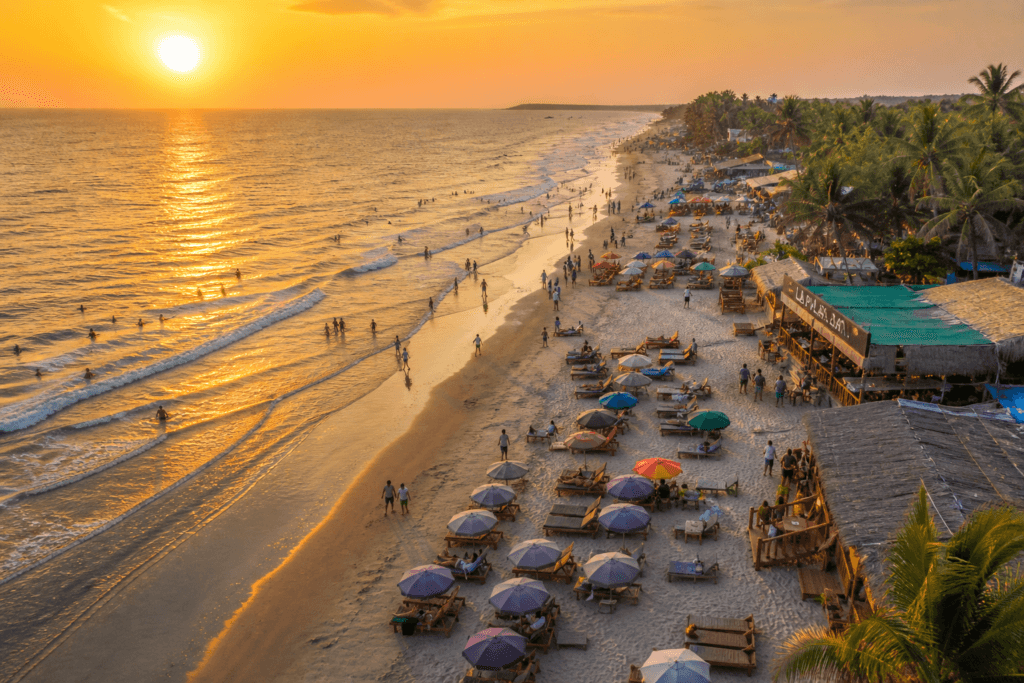
The bad decision is almost always the same one: booking on the beach strip because that is where the photographs are, then spending the weekend in traffic between Calangute and wherever you actually wanted to be.
Goa is a small state and it is easy to assume everything is close to everything. In December it is not. This is an itinerary built the other way round — base yourself centrally, keep the driving short, and treat the pool as part of the holiday rather than a thing you glance at on the way out.
Which airport
Goa has two, at opposite ends of the state, and the choice matters more on a short trip than a long one.
Dabolim, in the south, has the denser domestic schedule. This winter Air India has strengthened Mumbai and Delhi, IndiGo has increased Chennai, Rajkot, Navi Mumbai and Chandigarh, and Air India Express has added capacity on Mumbai and Bengaluru.
Manohar International at Mopa, in the far north, now takes a daily Air India Express service from Bengaluru, a daily IndiGo service from Chandigarh through the season, and restored Star Air routes from Nanded and Shivamogga. FLY91 has resumed Navi Mumbai.
Between them the two airports are adding 84 domestic flights a week this winter. For a weekend in the Bardez villages — Pilerne, Saligao, Candolim — either airport is about an hour, so take whichever flight time suits. If you are heading right up to Mandrem or Arambol, Mopa is far closer and worth paying a little more for.
Flight schedules can change. Check the operating dates and airport code with your airline before booking.
Why base yourself inland
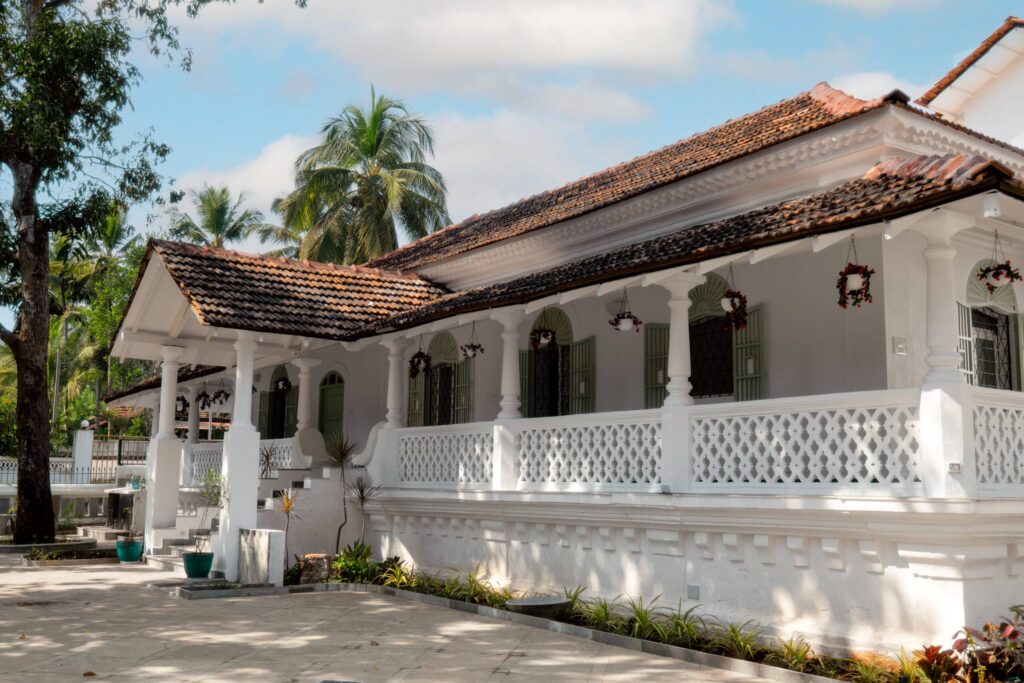
Pilerne is a village in Bardez, sitting in the countryside between Candolim and Saligao, about ten kilometres from Panaji. Paddy fields, narrow lanes, Portuguese-era houses, and no particular reason to stop unless you are staying there.
Which is exactly why it works for a short trip. Candolim and Sinquerim beaches are ten to fifteen minutes away. Panaji and the Mandovi are about twenty. Anjuna and the Saturday night market are half an hour. You are inside everything without being inside the noise of any of it, and you can get back for an afternoon swim without it costing you the afternoon.
The alternative — a room on the Calangute strip — puts you walking distance from one beach and in a queue for everything else.
Day one: arrive, and do not plan anything
Whatever time your flight lands, the first evening is not for sightseeing. Drop your bags, swim, and eat locally.
Saligao, Sangolda and Porvorim, all within fifteen minutes, hold a serious concentration of North Goa's better restaurants — and unlike the beach shacks they are open through the year and take bookings. Book one before you fly. The difference between a planned first dinner and a hungry hour of scrolling is larger than it sounds when you have only three nights.
Day two: the coast, then the quiet half
Start early. Candolim or Sinquerim in the morning, before the heat and before the day-trippers. Sinquerim is the calmer of the two and sits below Fort Aguada.
Late morning, climb up to the fort itself — a seventeenth-century Portuguese structure with its lighthouse, the sea on one side and the Mandovi on the other. It takes an hour and it is the best view you will get without driving inland.
Afternoon back at the villa, because the middle of a Goan day is not for being outside.
If anyone in the group wants something other than beach, the Museum of Goa is in Pilerne itself — three floors of contemporary art, a sculpture garden and a café. We have written about it separately.
Evening: Anjuna or Vagator if you want the noise, Reis Magos and the river if you do not.
Day three: Panaji
Give the last full day to the capital, twenty minutes away. Fontainhas, the Latin Quarter, is the reason to go — painted houses, narrow streets, a couple of good galleries, and a morning's walking that feels nothing like the beach.
Eat lunch there. In the evening, the cruise casinos on the Mandovi run late if that appeals, or there is the quieter option of dinner back in Porvorim and an early night before the flight.
One practical note on the last day: do not plan anything for the morning of departure. The drive to either airport takes an hour and you will want the hour before it to be unhurried.
Where to stay in Pilerne
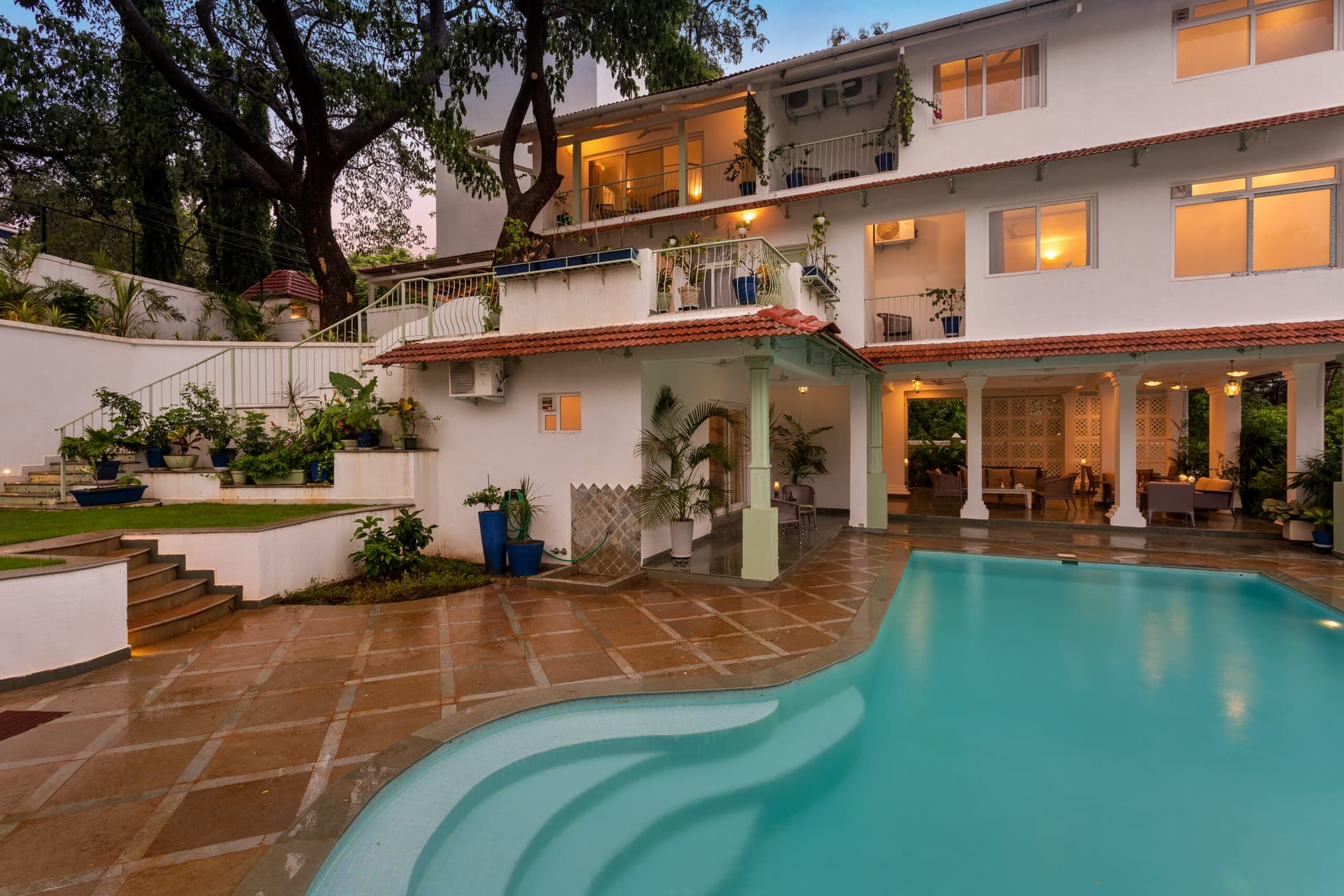
Aroha Palms has two villas here, both white, Greek-inspired houses set in the countryside with private pools, ten to fifteen minutes from Candolim and Sinquerim.
Aroha Palms Majestic has five bedrooms plus two lofts and sleeps up to fourteen. Four of the bedrooms are on the ground floor, which matters if anyone in the group would rather not take stairs. The lofts work well for teenagers or the younger cousins — part of the house, but slightly apart from it.
Aroha Palms Grande is a six-bedroom art villa for twelve, the more design-led of the two, built around light and considered interiors.
Taken together as Villa Imperial the two give eleven bedrooms across one site — which is usually how a group of three or four families ends up booking a long weekend.
For a group, this is also simply better value per head than the equivalent number of hotel rooms, and it gives you a kitchen, a dining table and somewhere to sit up talking after the children have gone to bed. On a three-night trip, that is most of what you came for.
Making three days feel longer
Four things, learned the hard way.
- Fly in on the Thursday evening rather than Friday morning if you possibly can. It converts a two-and-a-half-day trip into a three-day one for the price of one extra night.
- Arrange a car and driver for the stay rather than booking taxis trip by trip. In season, finding a ride at the moment you want one is the thing that quietly eats a weekend.
- Pick two things to do and leave the rest open. Groups that plan six end up rushing all six and enjoying none.
- Book the restaurants. The good places in Saligao and Porvorim fill in season, and a group of eight without a reservation is a problem at nine in the evening.
When to go
November to February is the obvious window: dry, warm, and busy. The last week of December is the most contested in the Goan calendar and needs booking months out. October, and late February into March, are the value weeks — much the same weather, noticeably fewer people, and the villages back to their own pace. The monsoon is green, dramatic and empty, which suits some trips and not a first one.
Aroha Palms has two private villas in Pilerne, North Goa — Majestic and Grande — ten to fifteen minutes from Candolim and Sinquerim, available individually or together as Villa Imperial. Enquire about dates.