Most visitors to North Goa pass through Pilerne without noticing it. It sits inland from the Candolim–Calangute strip, a village of paddy fields, narrow lanes and Portuguese-era houses, and there is nothing on the road to suggest you should stop.
Which makes it slightly absurd that one of India's more interesting contemporary art museums is here, in an industrial estate on the edge of the village, ten minutes from one of the busiest beaches in the state.
Pilerne rewards the kind of visitor who has already done the beaches and wants to know what else Goa is. This is a guide to that version of North Goa — and to using the village as a base rather than a detour.
The Museum of Goa
MOG — the Museum of Goa — opened in Pilerne in 2015, founded by the artist and former doctor Subodh Kerkar. The acronym is deliberate: mog is the Konkani word for love.
It is three storeys of contemporary art with no permanent collection, which is the most interesting thing about it. Rather than hanging the same works year after year, MOG runs a rotating programme of exhibitions, residencies, art courses, workshops, readings, talks, screenings and plays. Go twice in a year and you will see two different museums.
Much of Kerkar's own work engages with Goa directly — its coastline, its colonial history, the long conversation between Portugal and the Konkan. There is a sculpture garden outside and a café on site, and the building is designed to be spent time in rather than walked through.
A practical note: it is a working art institution, not a monument, so exhibitions change and occasionally the galleries are between shows. Check what is on before you go rather than turning up and hoping.
Why an Art Museum Ended Up in a Village
It is less strange than it first appears. Goa has supported artists for a long time — the light, the cheap studio space, the distance from the Delhi and Bombay art markets — and the inland villages of Bardez are where a good many of them have quietly ended up.
Pilerne's particular advantage is geography. It is close enough to the coast to be reachable and far enough back to be affordable and quiet. That combination has drawn studios, workshops and design businesses into the villages along this belt, and Saligao and Sangolda, both minutes away, have developed into the part of North Goa where people go to look at furniture, textiles and objects rather than to look at the sea.
None of this announces itself. There is no arts quarter and no signage. You find it by staying nearby and driving slowly.
A Slower Way to See North Goa
Built around Pilerne, an afternoon looks quite different from the standard beach itinerary (or a crowded New Year's Eve in North Goa rush).
The forts. Fort Aguada and its seventeenth-century lighthouse sit above Sinquerim, a short drive towards the coast, with the sea on one side and the Mandovi on the other. Reis Magos, smaller and more thoughtfully restored, looks across the river towards Panaji and is usually near-empty.
The churches and the houses. Saligao's Mae de Deus church is the most photographed building in this part of Bardez, and the lanes around Pilerne, Saligao and Sangolda are full of Portuguese-era houses in various states of repair and rescue.
Panaji. Roughly ten kilometres away. The Latin Quarter of Fontainhas is the obvious stop — painted houses, narrow streets, a couple of good galleries — and the river casinos are there in the evening if the mood changes.
Eating. Porvorim, Saligao and Sangolda between them hold a serious concentration of North Goa's better restaurants, and unlike the beach places they are open through the year and take bookings from people who are not on holiday.
Staying in the Village
The reason to stay in Pilerne rather than visit it is that the good parts are slow. They do not survive being squeezed into a half-day trip from a hotel in Calangute.
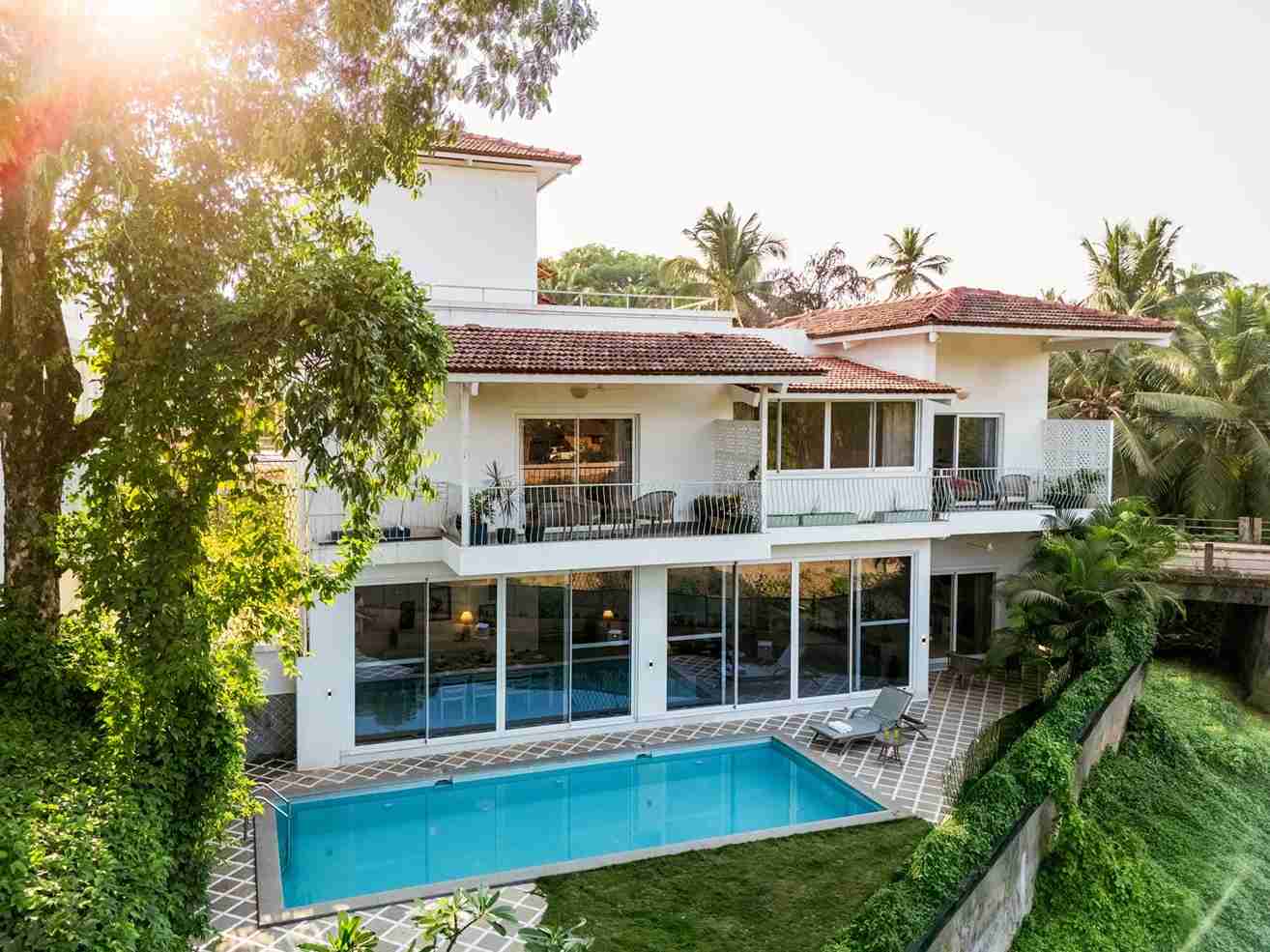
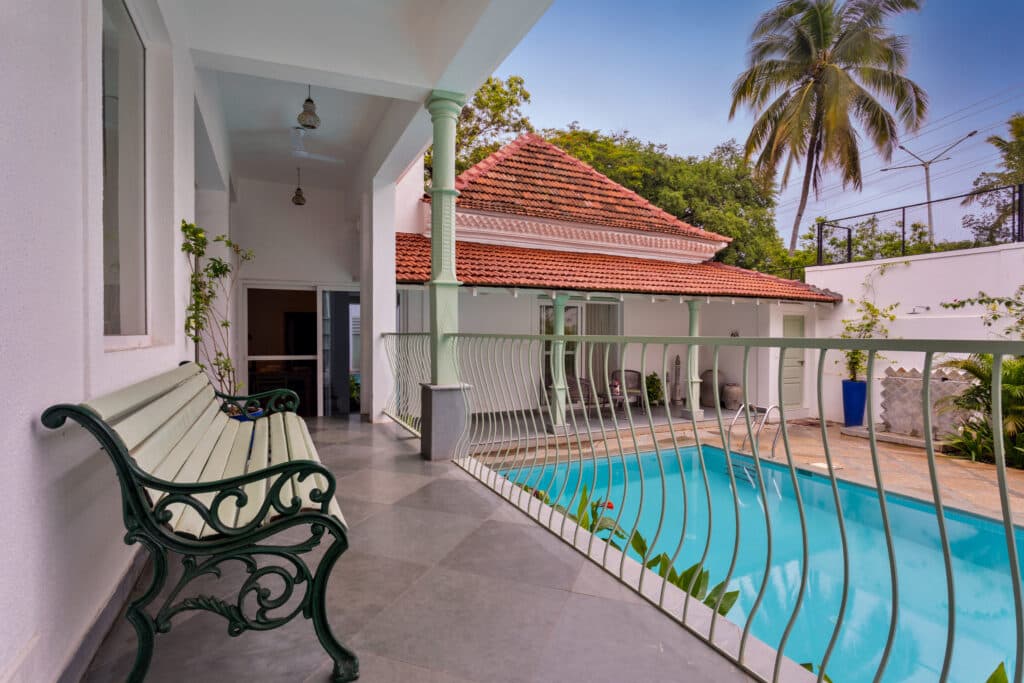
Aroha Palms has two villas here, both white, Greek-inspired houses set in the countryside with private pools, about ten to fifteen minutes from Candolim and Sinquerim.
Aroha Palms Grande is a six-bedroom art villa for twelve — the more design-led of the two, built around light and considered interiors, and the natural choice if the museum is the reason you came.
Aroha Palms Majestic has five bedrooms plus two lofts and sleeps up to fourteen, with more room to spread out for a larger family or group.
Both are taken together as Villa Imperial when a group needs all eleven bedrooms.
When to Come
November to February is the obvious window — dry, warm, and when the cultural calendar is busiest. March into May is hotter but considerably quieter, and the museum is air-conditioned, which is not a trivial advantage in April.
The monsoon, June to September, is the season most people write off and the one Pilerne is arguably best in. The paddy fields are green, the light is dramatic, the roads are empty and the rates are at their lowest. If you are here for the interiors — the museum, the houses, the restaurants — the rain costs you very little.
Getting There
Pilerne sits between Candolim and Saligao, roughly ten kilometres from Panaji. Manohar International Airport at Mopa is about an hour north, Dabolim about an hour south. Once you are here a scooter or a car is worth having: the village is spread out, the lanes are narrow, and the whole point of this part of Goa is the freedom to stop when something catches your eye.
Aroha Palms has two private villas in Pilerne, North Goa — Grande and Majestic — minutes from the Museum of Goa and ten to fifteen minutes from Candolim. Enquire about dates.